Are These Bees?
We get dozens of calls each week from people have insects of all sorts bothering them. You’re probably on this page because you are in a similar situation. We always encourage calls and love talking insects with people. If you have questions please call us.
When you call we’ll have a series of questions for you to help you identify what sort of insects you are dealing with. The following is a breakdown of those questions. We hope that it can help people who have immediate issues with insects or just folks who want to learn more about bees and wasps make better informed identifications of the insects they see around them.
Can you see the nest?
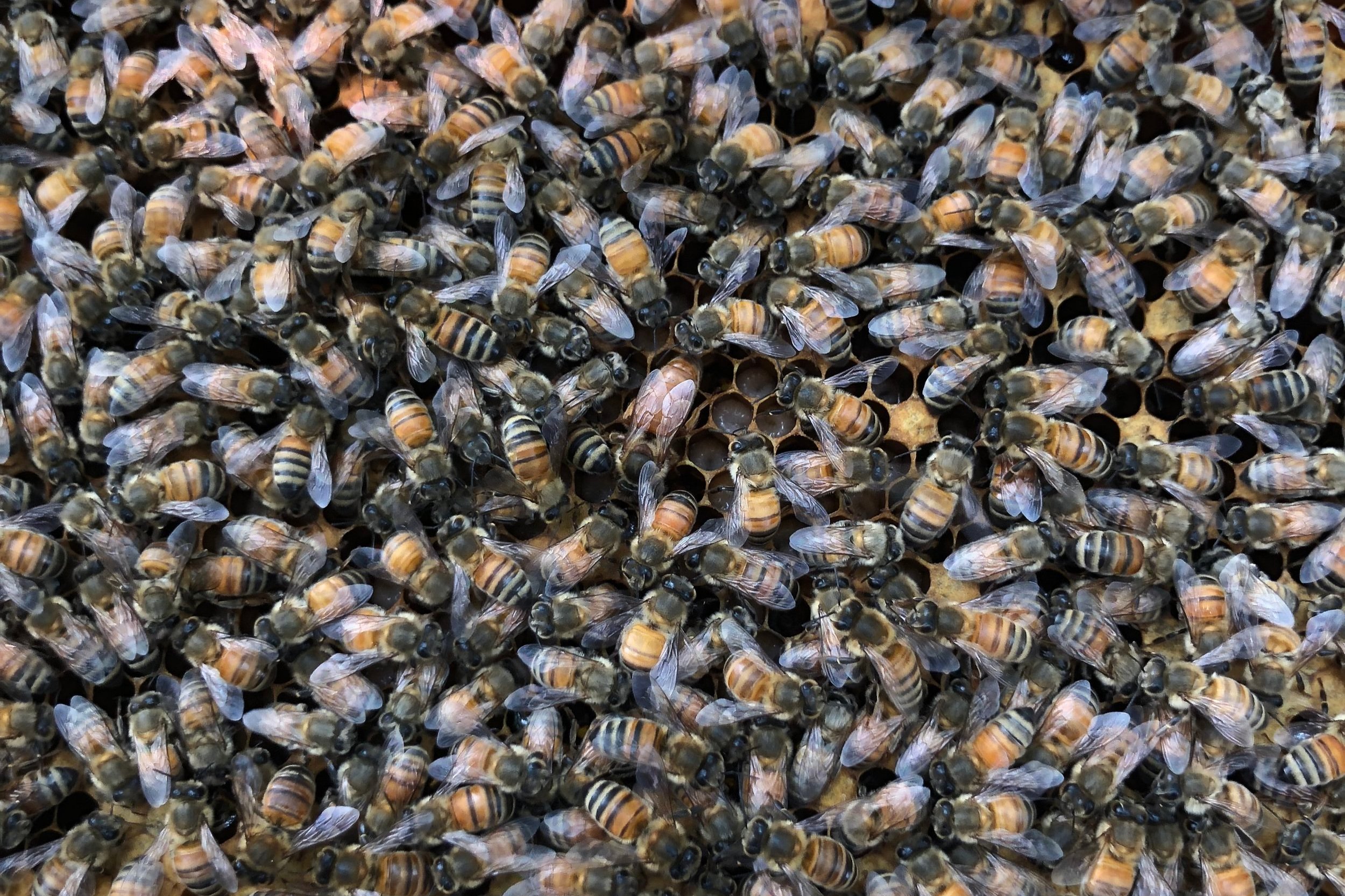
Honey bee hives are often misrepresented in art and media as hanging from tree limbs or sitting out in the open. In nature you will rarely ever see a bee hive. In five years now of working with bees I have only seen one honey bee hive built out in the open. Honey bees strongly prefer to build their hives inside of enclosed areas. In nature this is often the cavity inside a tree. However most of the calls that we get come from when people have the bees inside their homes or other structures.
Please select the image below that looks most like what you are looking at. If none of these look right send an image of what you are seeing to wadesbees@gmail.com and we would love to take a look at what you are working with.
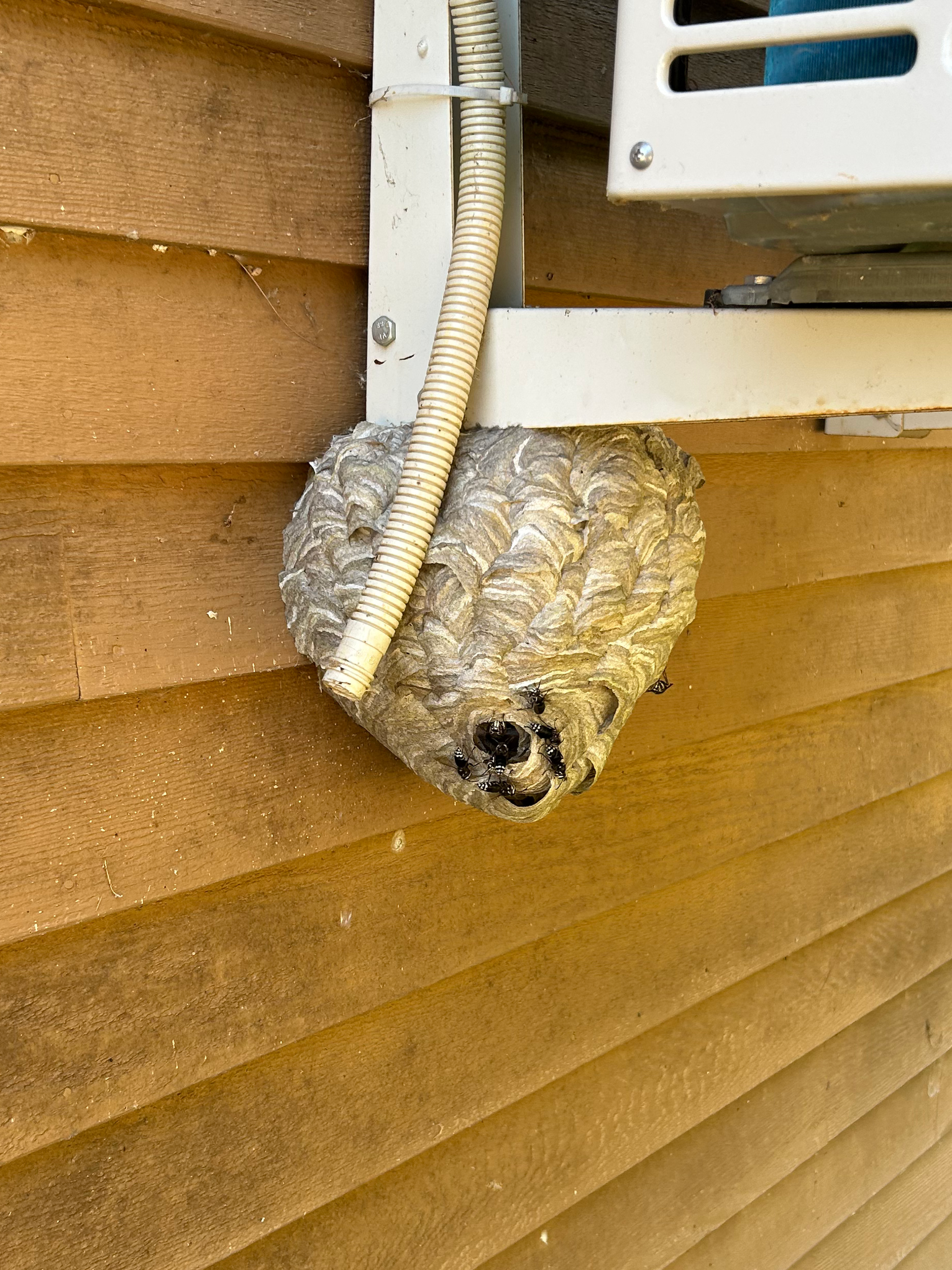
A Gray Paper Nest
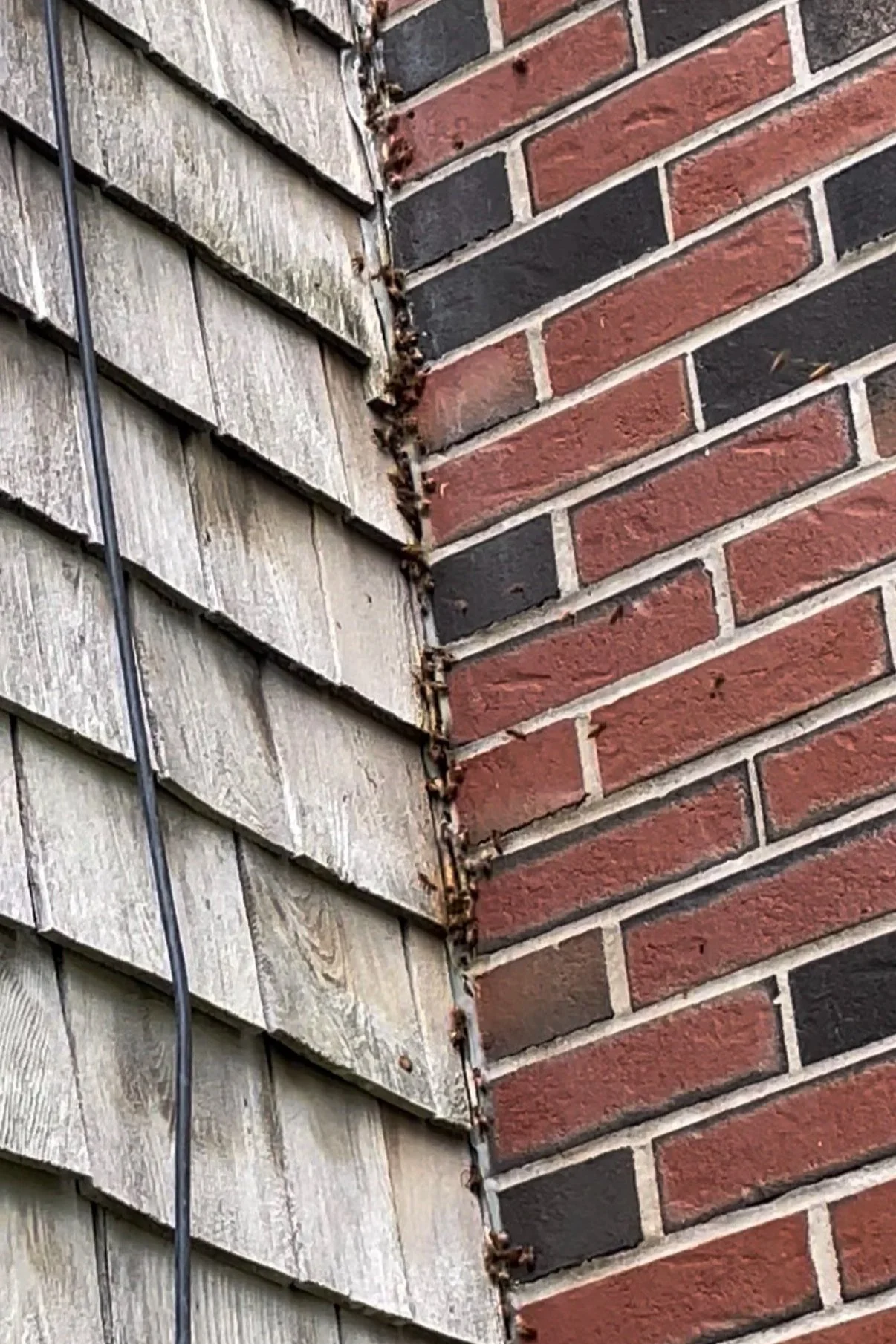
The Nest is Hidden
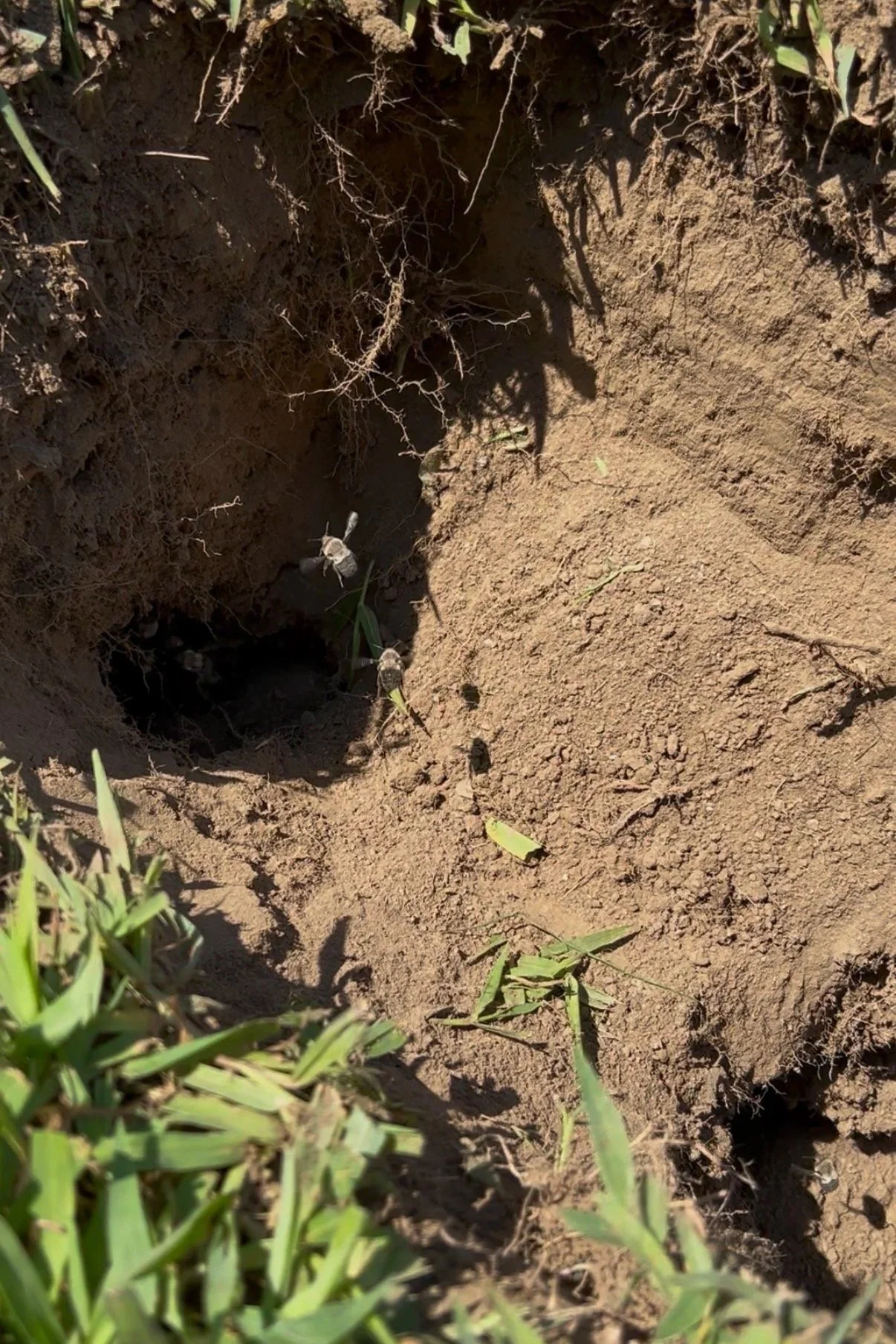
Bees in the Ground
Not Bees
There are a number of species that build paper nests. They are all members of the family Polistinae or Paper Wasps. No type of bee builds a nest like this.
Might Bee
Honey bees build their hives inside cavities that provide them protection. In nature this is often trees, but it might also be your house! If you see bees coming and going from inside somewhere, you might have honey bees.
Not Honey Bees
If you see bees in the ground you might be seeing bees but you probably aren’t seeing honey bees. There are several species of bumble and carpenter bee who live in ground nests. However there are also many species of wasp who nest in the ground so proceed with caution!
What do the insects look like?
Hairless
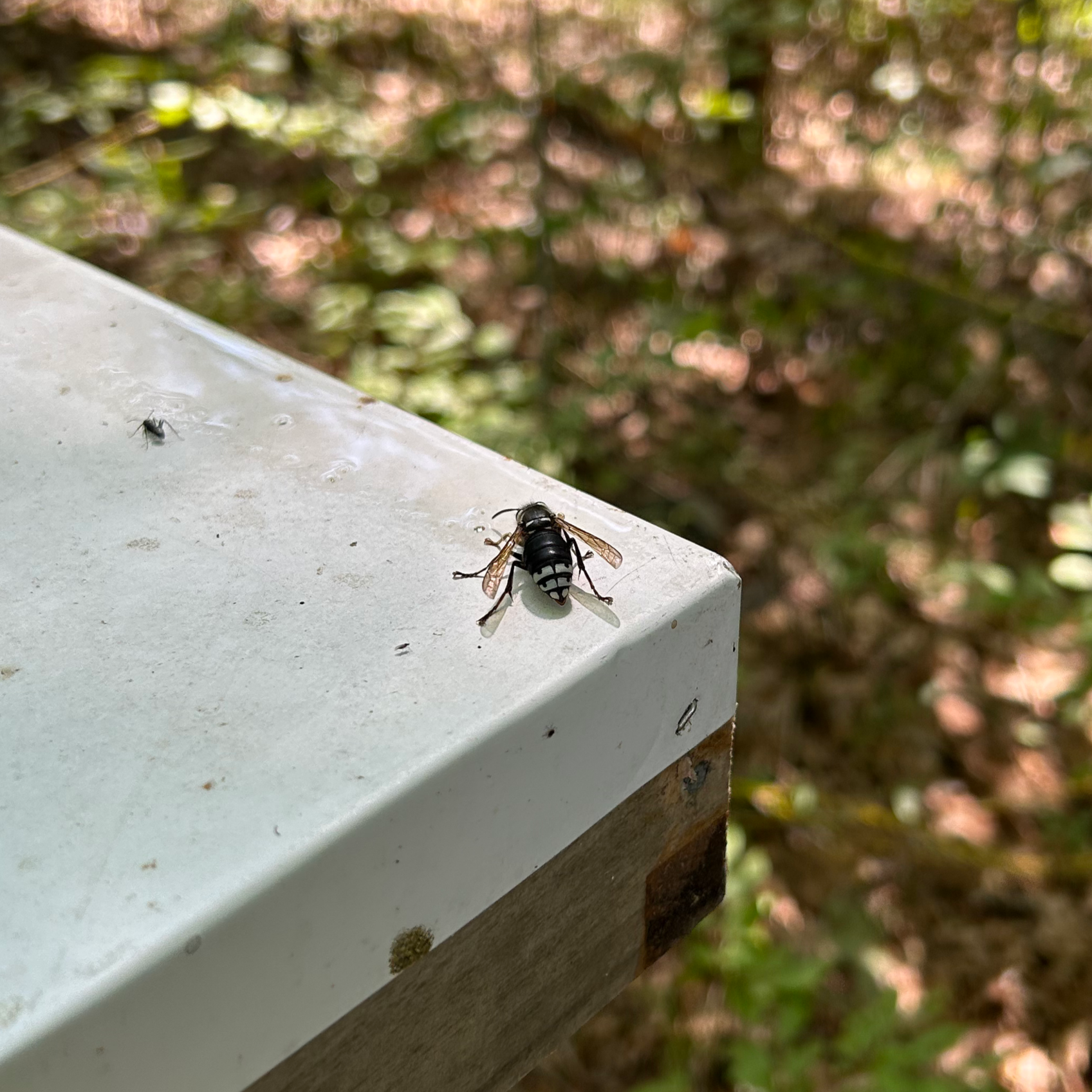
Not A Bee
Honey Bees have hair on their bodies. Most species of wasps do not or have much lass. This bald faced hornet has a shiny smooth body.
Some Short Hair
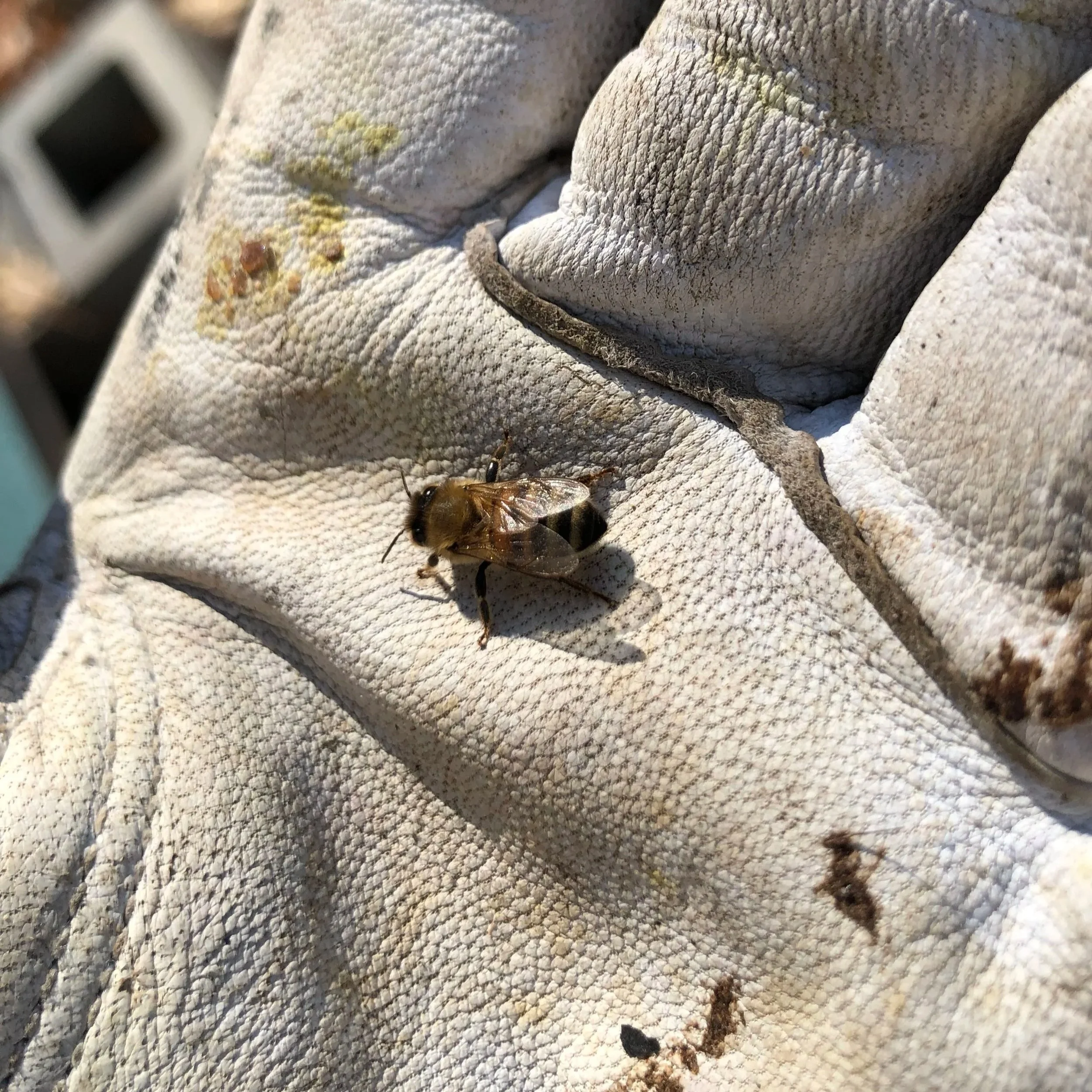
Honey Bee
Honey bees have fuzzy bodies with visible hair. This honey bee stopped to say hello during a routine hive inspection.
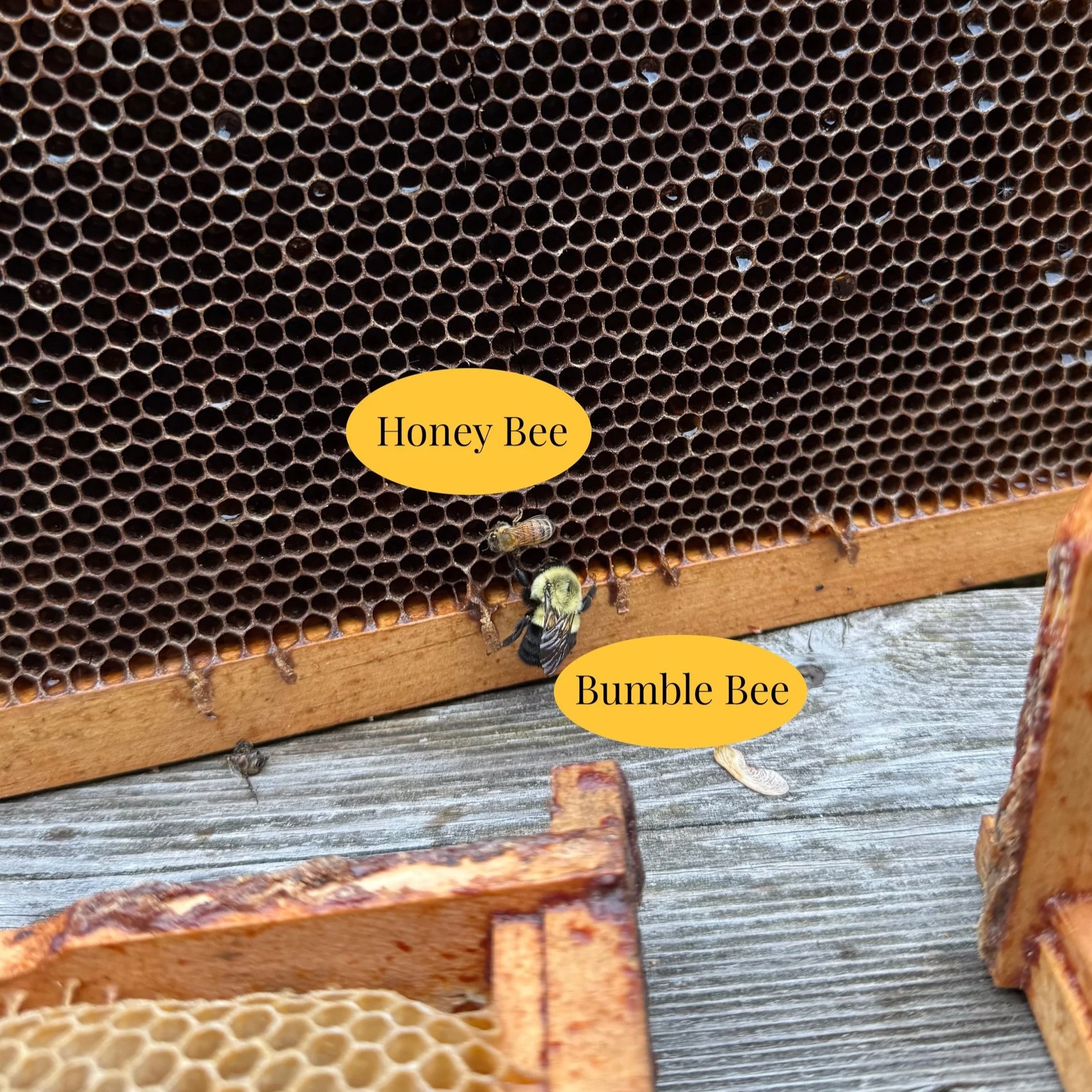
Bumble Bee
Bumble bees look very fuzzy all over their bodies. Carpenter bees can also be confused for bumble bees but both are distinguished from honey bees by their size and how hairy they are.
Very Fuzzy
Side by Side Comparisons
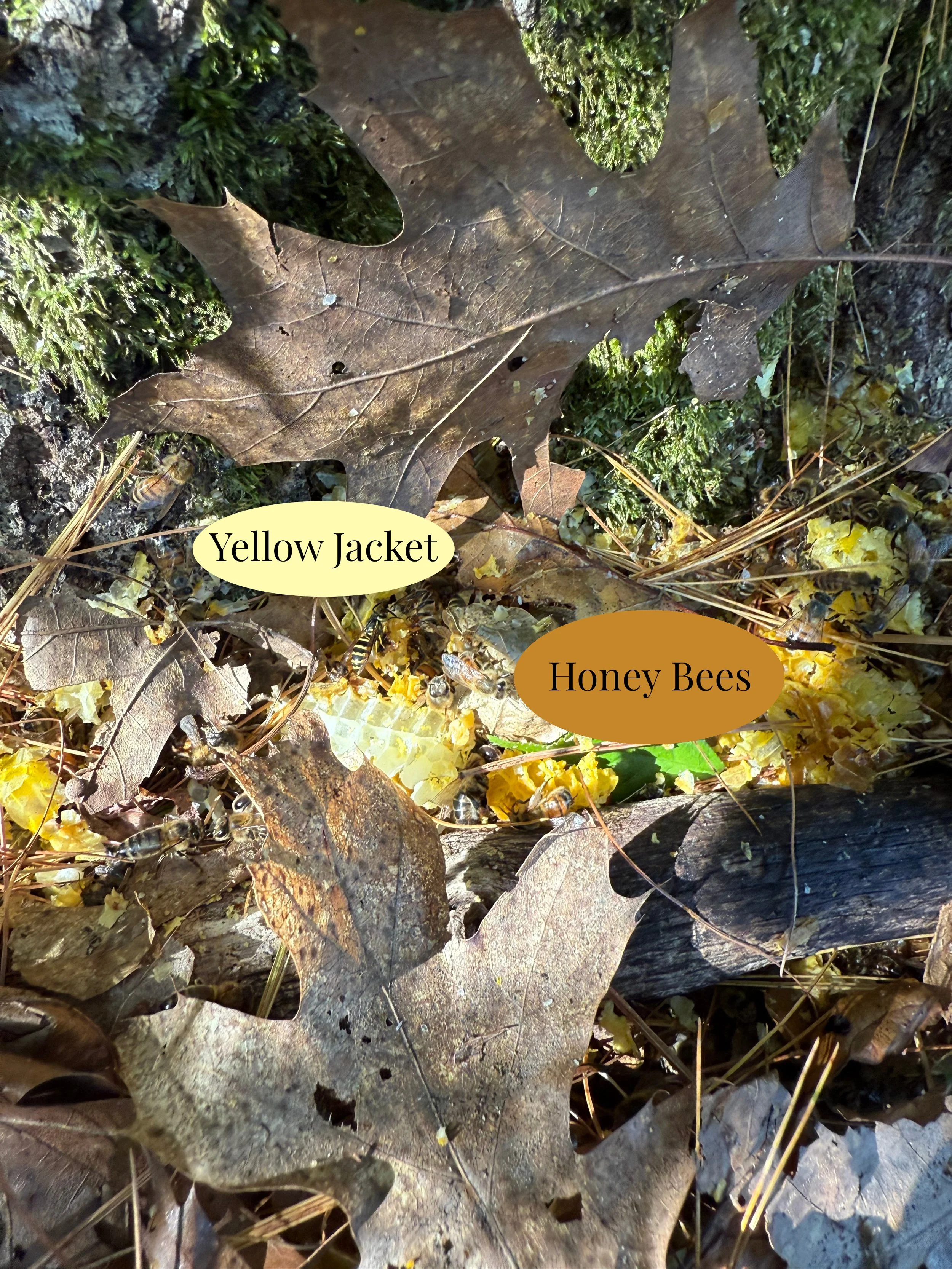
This Yellow Jacket (Wasp) tried to scavenge some honey during a hive removal job and presented a perfect opportunity for a side by side comparison between itself and a honey bee.
Honey bees are often depicted a yellow but they are in fact more commonly tan, orange or even black.
Yellow jackets by comparison are truly yellow.
Another distinguishing feature is the character of their stripes. Honey bees stripes are uniform circles around their bodies. Wasps typically have patterns that look like “fangs” or points that seem to drop of their stripes.
If you see a yellow insect with pointy stripes and little to no body hair, you’re looking at a wasp.
Here we have a honey bee and a bumble bee next to one another. The honey bee is much smaller, more orange colored and less hairy.
The bumble bee by comparison is bright yellow, bigger bodied and very fuzzy.